Your electrical panel is the hub of your home's power distribution. When demand exceeds capacity — or when aging equipment can no longer support modern electrical loads — a professional evaluation determines whether targeted improvements or a full panel upgrade is the appropriate path.
Not every older panel requires immediate replacement. A panel evaluation examines the actual condition of the equipment, the available capacity, the current and anticipated electrical loads, and whether the existing panel can safely support any planned additions such as EV chargers, HVAC upgrades, or home-office circuits.
Our evaluation considers breaker condition, bus bar integrity, wiring connections, grounding, labeling, and whether the panel meets the requirements of the property's current and near-future electrical demand. As part of our Atlanta electrical solutions, we provide a clear recommendation — whether that involves adding circuits to the existing panel, replacing individual components, or upgrading to a larger panel with greater capacity.
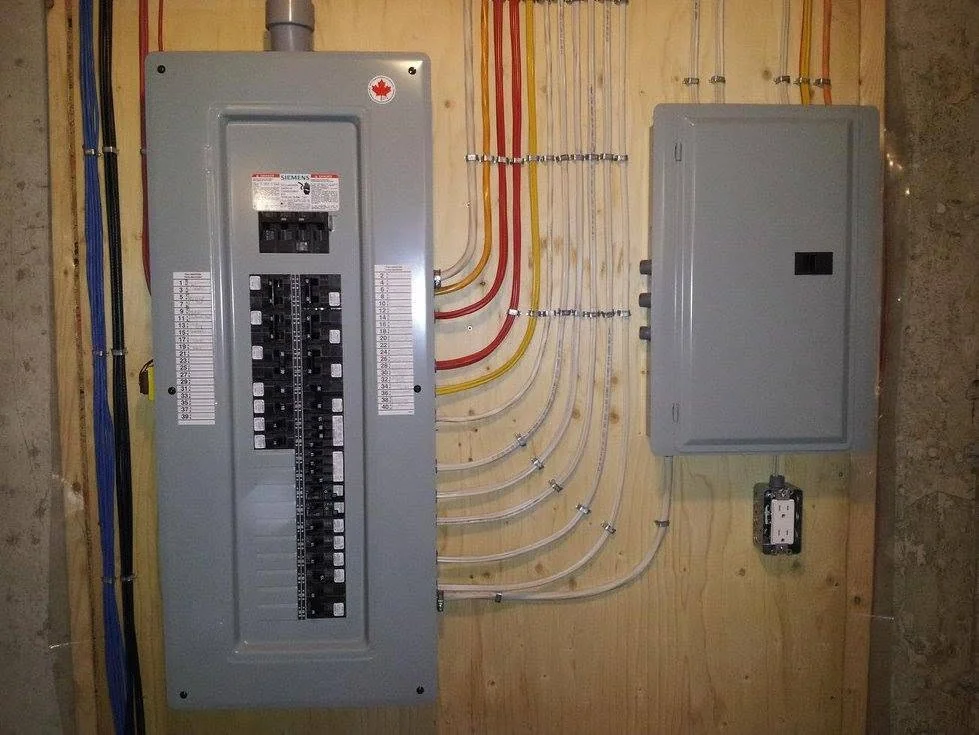
These conditions may indicate that your panel is approaching or exceeding its practical capacity.
Breakers that trip under normal use may indicate circuits operating at or near capacity, overloaded branch circuits, or aging breakers that no longer hold properly.
A full panel with no available slots limits your ability to add circuits for new appliances, dedicated equipment, or room additions without upgrading.
Adding an EV charger, upgrading HVAC, building a home addition, or installing a hot tub often requires more capacity than the existing panel provides.
The scope depends on the evaluation findings. Panel upgrade work may involve:
Calculating existing and anticipated electrical loads to determine the panel capacity needed for the property.
Replacing the existing panel with a larger unit that supports current and near-future demand, with proper breaker allocation and labeling.
Adding dedicated circuits for specific equipment — EV chargers, HVAC units, kitchen appliances, workshops, and home offices.
Verifying and correcting grounding electrode connections, equipment grounding, and bonding as part of the upgrade.
Several factors contribute to a panel becoming insufficient for a property's electrical needs.
Modern homes use significantly more electricity than when many panels were originally installed — HVAC, EV chargers, kitchen appliances, entertainment systems, and home offices all add load.
Older panels may have components that are no longer manufactured, breakers that don't trip reliably, or bus bars that show signs of overheating or corrosion.
Adding rooms, converting garages, or renovating kitchens and bathrooms often requires circuits that the existing panel cannot accommodate without expansion.
Some older homes were built with panels that were adequate for their era but don't meet the electrical demands of current occupancy patterns and equipment.
Inspect existing panel, assess capacity, evaluate breaker condition, and review current electrical loads.
Calculate existing and anticipated loads to determine the appropriate panel size and configuration.
Replace or expand the panel, install breakers, transfer circuits, and verify proper connections.
Verify operation, label all circuits, and provide documentation of completed work.
Many homes in historic and established Atlanta neighborhoods still operate on 60-amp or 100-amp service panels designed decades ago. Modern appliances, HVAC units, and high-demand electronics require updated panel capacity.
As Atlanta homeowners integrate electric vehicles, induction cooktops, and high-efficiency heat pumps, a panel upgrade ensures safety, code compliance, and reliable power distribution without overloading breakers.
Contact us to schedule an on-site evaluation of your electrical panel and discuss your property's current and future electrical needs.
